
Régis FRANC Le café sur la plage
Presentation
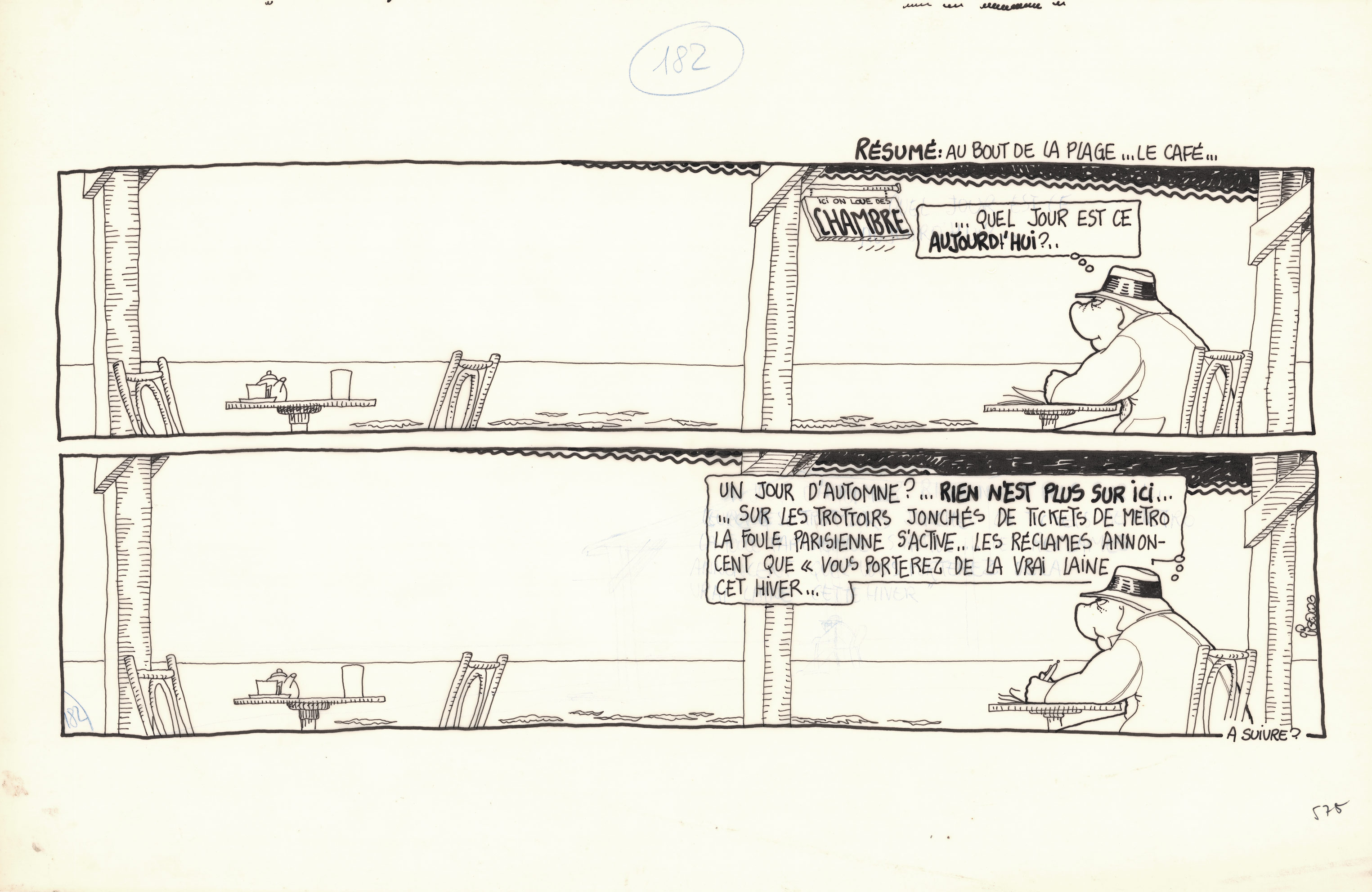
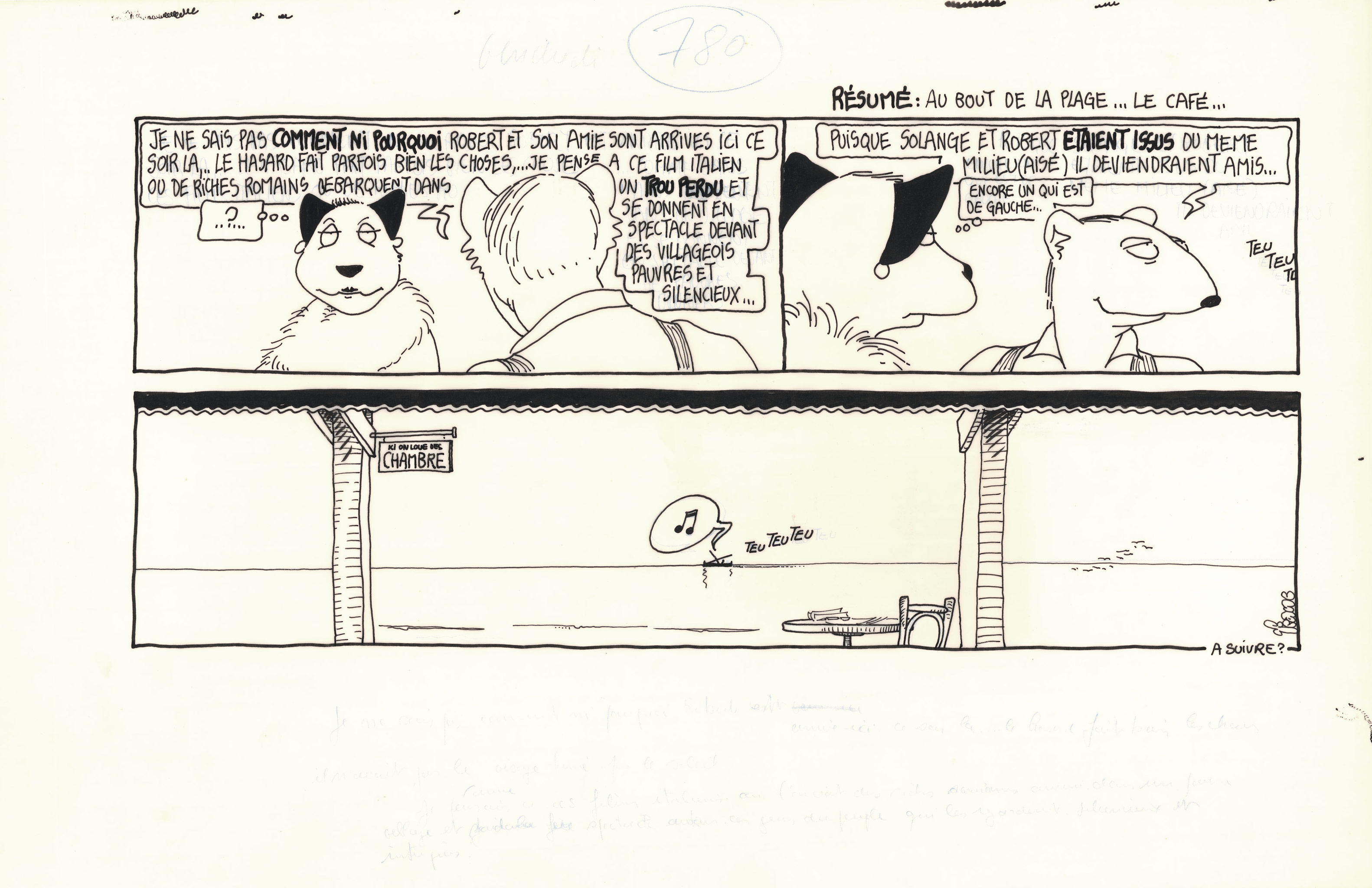
A wooden shack looking out over the Mediterranean; a long, empty stretch of beach. Now and then, a boat appears on the horizon. It belongs to the Greek sailor Ulysses. Other boats sail past. Close up, we note the paltriness of the "À la côte d'Azur", with its corrugated iron roof. There's a terrace, a scattering of tables, and a sign announcing "Room to Rent". The French flag is flying from a pole. Inside, behind the counter, we find the café?s owner, Léon Bouchot, on top of the fridge a book by Sigmund Freud.
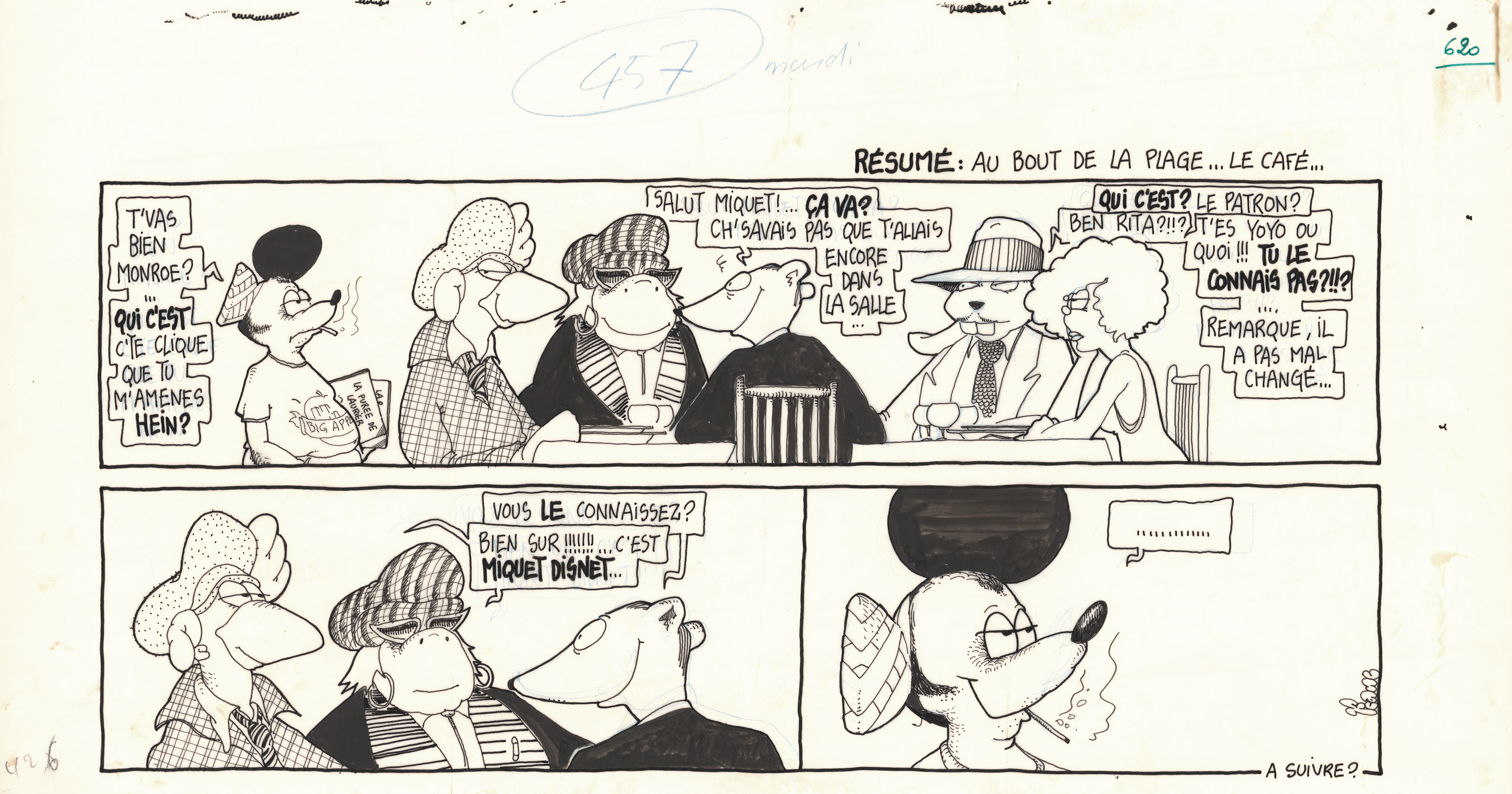
The scantiest of details... A customer - a woman - is sitting at the bar. On the terrace, a novelist is busy writing. The stage is set, everything in place. Ready for the story to begin. But whose story? Who is the focus? Solange, Léon's wife, determined to escape this nowheresville? The writer short on inspiration? The naive Rita dreaming of Hollywood? The producer oblivious to his secretary's amorous vibes, though they are none too subtle?
Le Café de la plage, published daily in Le Matin de Paris from March 1977 to September 1980, is all this and more. Régis Franc invented an art of digression, a narrative of suspended time, in which lightness itself provides the focus of interest. His characters talk about life the way they might talk about the weather: gently, lucidly, with humour and nostalgia. The result is both literary and cinematographic. Every silence counts, underlining the contradictions and the absurdity inherent in human nature, contrasting the characters' aspirations with the fragile realities of their situation. It is also a demonstration of all the different ways a story can be told in comic strip, dismantling the fourth wall in order to rebuild it in the next panel, switching time and place, all in the blink of an eye, however long or short.
Régis Franc's work is a careful balancing act, dreamy, playful, mischievous and teasing. Franc made a point of never looking back at what "I did yesterday when constructing his narrative one that inserted itself as a kind of counter-thrust within the pages of a major daily newspaper. The full force of that narrative could be appreciated when Casterman published the work in its entirety in 1989. Huberty & Breyne is proposing to display this masterpiece of elegance and ingenuity, executed in Indian ink on tracing paper, in its original form for the first time.
PRIVATE VIEW
Thursday 11 December 2025
from 6:00 p.m
in the presence of the artist
EXHIBITION
From Friday 12 December 2025
to Saturday 10 January 2026
PARIS | Matignon
36 avenue Matignon, 75008 Paris
Wednesday > Saturday 11.00 am - 7.00 pm