Eric VEILLÉ Le sens de la vie
Presentation
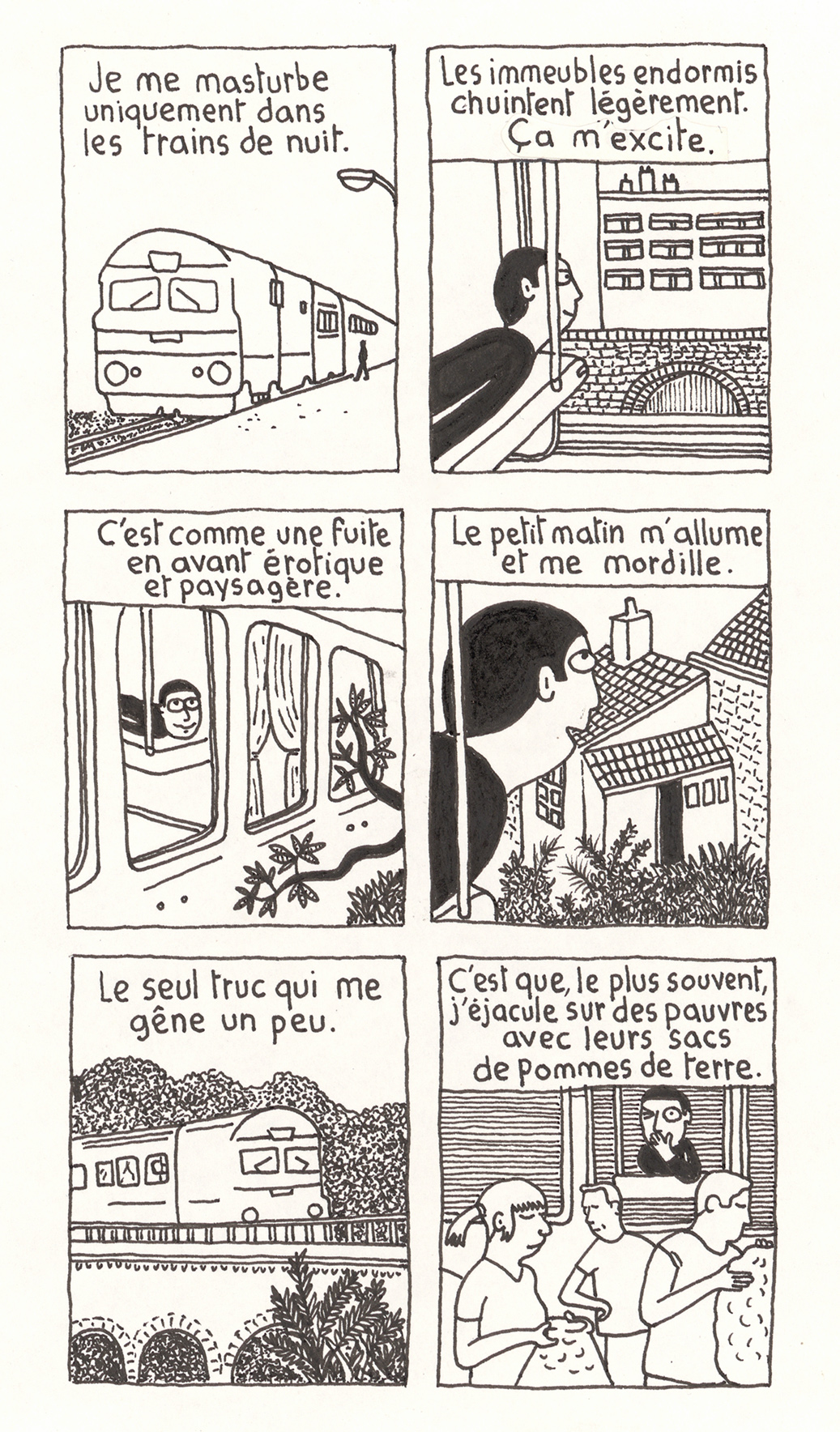
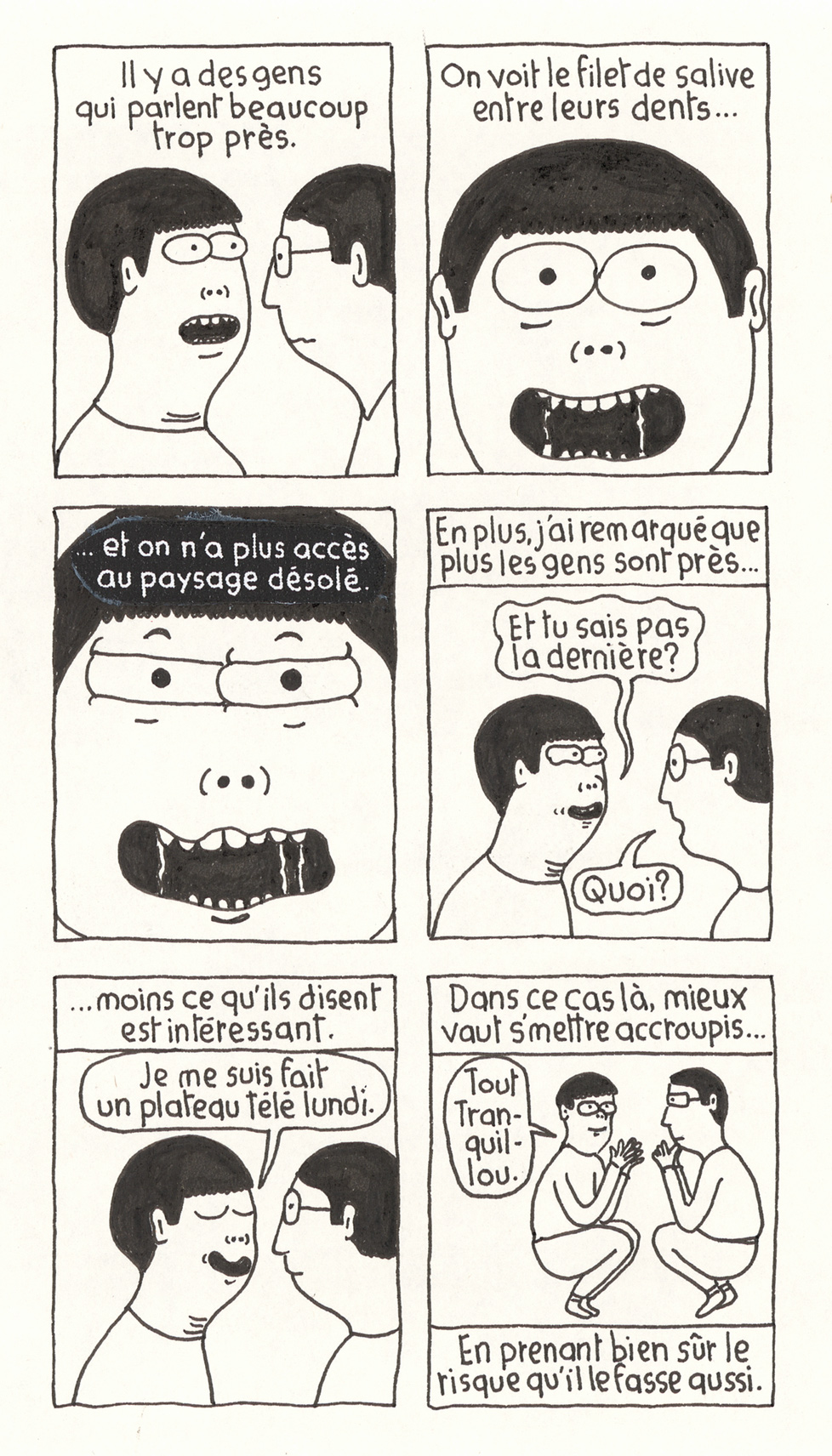
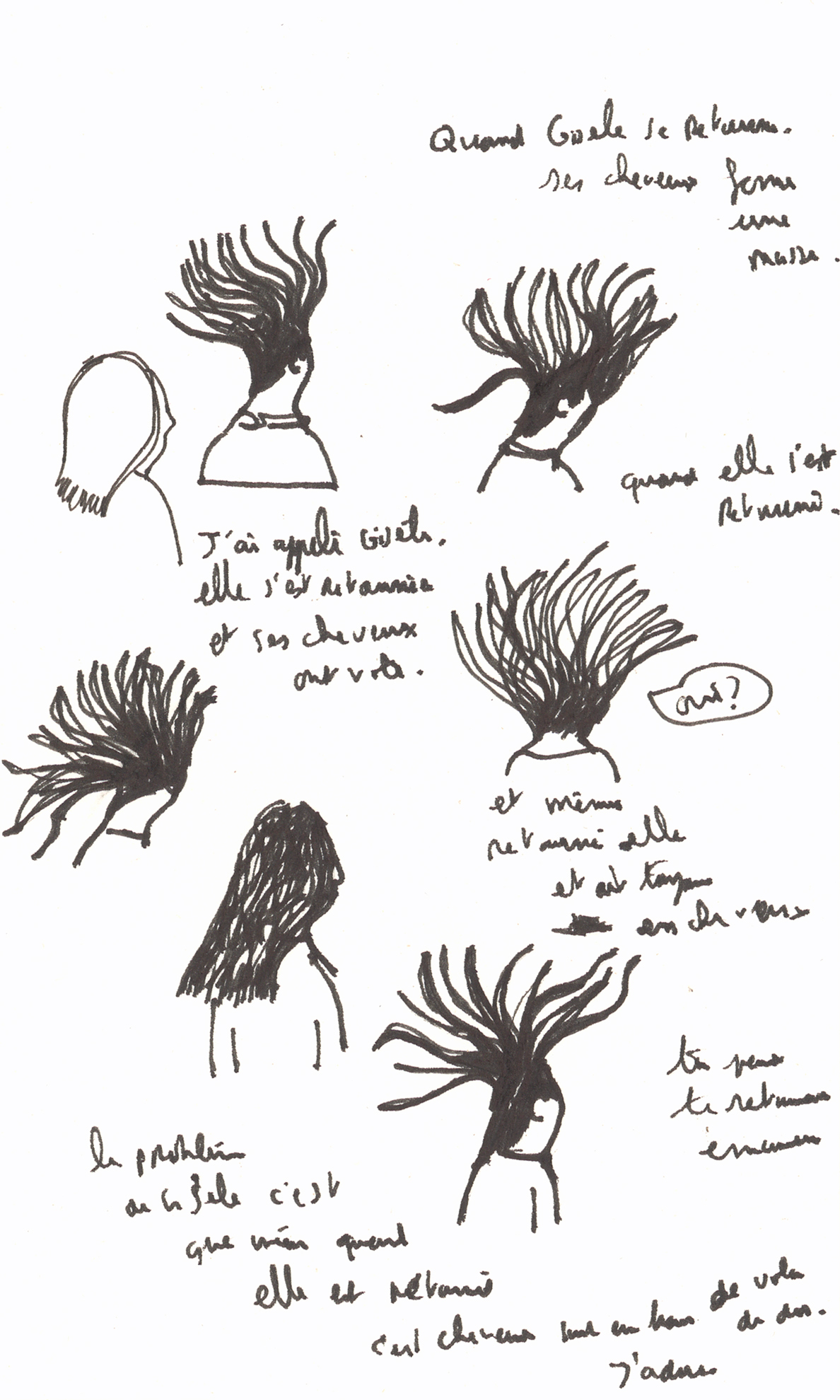
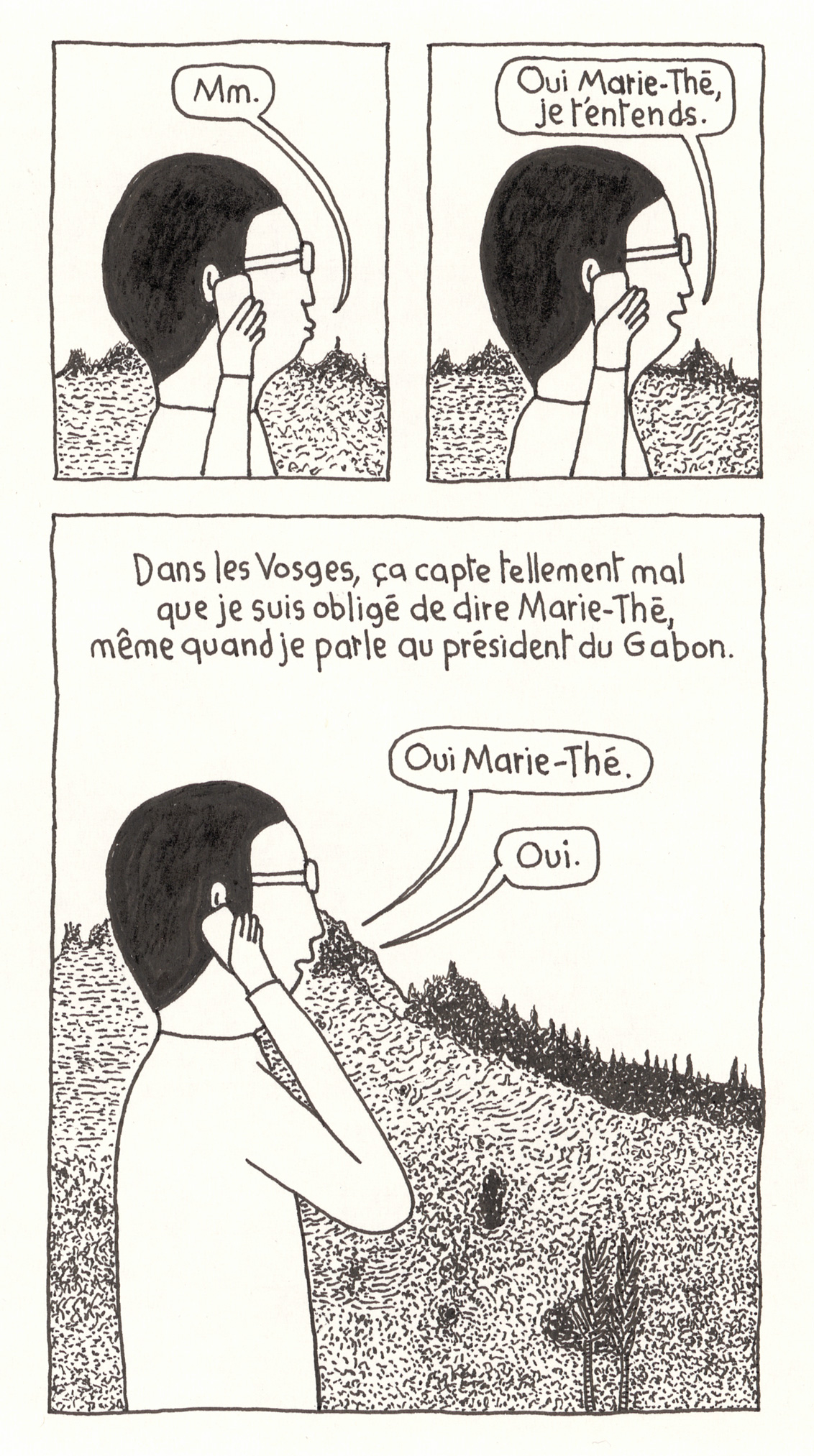
Thirteen years after the publication of Le Sens de la vie et ses frères (2008), Eric Veillé has brought out Le Sens de la vie et ses petits (2024, Éditions Cornélius). "I opened it and bought it at once" - this front-cover endorsement from Philippe Katerine, the champion of the absurd, promises readers a rare delight on delving into the pages of this second volume. It shares with its predecessor the format of the Moleskine notebooks in which Eric Veillé records things seen and heard in the manner of a Georges Perec. But where Perec focused his efforts on a Tentative d?épuisement d?un lieu parisien, Veillé embarks on his own attempt to exhaust boredom, in a work where poetry coexists with absurdity and melancholy confronts cynicism.
The Huberty & Breyne gallery is delighted to be hosting Le Sens de la vie, the first exhibition devoted to the work of Eric Veillé, due to run in its Paris venue, Espace Chapon-21, from 26 February to 28 March 2026. Through a selection of (in every sense) original plates and previously unseen drawings, the exhibition invites viewers to admire the delicacy of the artist's line work and the sharpness of his wit.
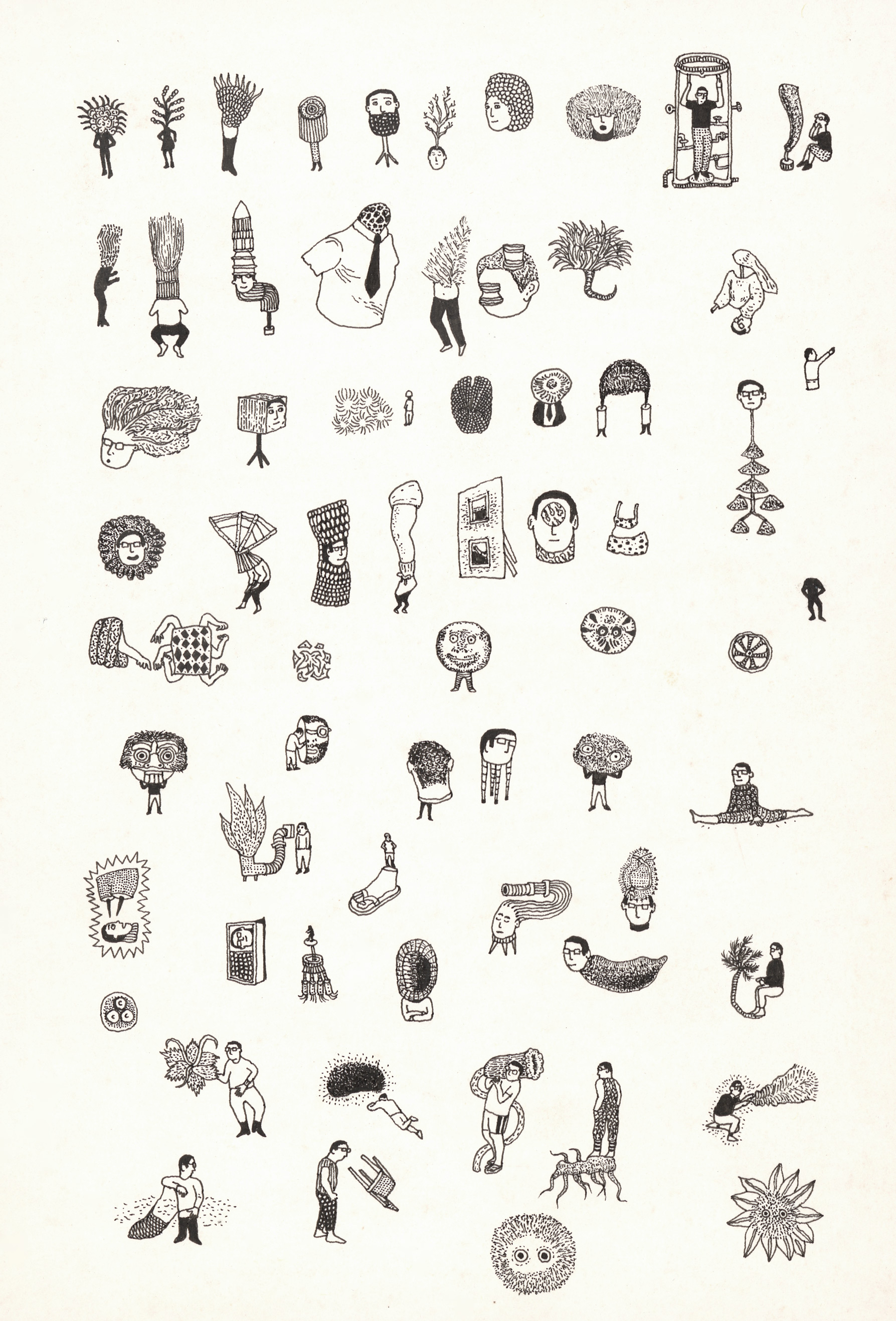
The format is the same for both volumes of Le Sens de la vie: on the right-hand page, a plate comprising six panels, and on the left a page left blank except for a tiny drawing stranded in the middle and depicting all manner of hybrid creatures (buttock-man, plant-woman, long-legged pebble? ). Eric Veillé?s drawing style is precise and delicate. His austere and minimalist ?ligne claire? is part of a rigorous approach which his offbeat subject matter then blows apart. The fine tip of his pen can also go off at a tangent. From one plate to the next, the ligne claire may be hijacked and the drawing break free from its frame to produce instead a full page of lush vegetation, a pseudo anatomical chart allocating ?bird names? to a set of fish scales, or a Pointillist décor that hurts our eyes. Eric Veillé disrupts his drawing the way he disrupts reality. His somewhat clueless fictional alter ego sporting square-rimmed specs is a reporter of the more-or-less, a would-be scientist and sociologist, a philosopher closer to Boris Vian?s Jean-Sol Partre than to Sartre himself, a character who subjects himself to a rigid discipline of listening, observing, preserving what he has heard in sealed boxes that don?t quite shut, then, using semi-automatic writing, letting the words warp, the themes metamorphose and the language veer off the rails. Without warning, the supernatural infiltrates the space between the panels; absurdity slips between the routines of the daily grind. The banal comes loose. We find ourselves in a world where people bear a moustache in place of a name, where a woman separates from the father of her troubles, and where the ?essence? of life is an absurd fuel that wrings the neck of our rigid adulthood. Somewhere between Glen Baxter, Boris Vian and Samuel Beckett, Eric Veillé sweeps away the guardrails the better to navigate the slope of a shaky logic, a self-sabotaged seriousness. The ?meaning of life? in Eric Veillé?s version appears to be a dead end. If there?s a signpost, it?s pointing the wrong way. So the artist amuses himself by imagining minute deviations, vanishing lines of everyday life. Text and drawing talk to one another until language itself collapses, yielding to a sense of metaphysical emptiness that is comical, absurd, and oddly consoling. Veillé uses the comics genre as poetic material, a space of infinite possibilities, and makes a deal with the reader, inviting a willing suspension of his or her disbelief. In Veillé?s world, the supernatural coexists with the triviality of everyday life, human rigidity is ridiculed and melancholy becomes a source of laughter. The poetic charge of Le Sens de la vie stands as a bulwark against absurdities of all kinds. Each of the artist?s vignettes presents an alternative to an ?obligatory? reality and reawakens the fresh, uninhibited gaze of childhood. Maybe that too is the meaning of Art?
Opening
Wednesday 25 February 2026
from 6:00 p.m
in the presence of the artist
Reading and screening
Friday 13 March 2026
at 6:00 p.m.
Exhibition
From Thursday 26 February
to Saturday 11 April 2026
PARIS | Chapon - 21
21 rue Chapon 75003 Paris
Wednesday > Friday 1.30 pm - 7.00 pm
Saturday 12 pm - 7.00 pm